Special study 002 · 9 August 2026 · 12 min
Before the
rookie logo.
Maeda homered on debut. Garnacho wore Argentina’s shirt for the first time. Ten cards show why not every beginning means the same thing.
 Exact-card images · sources linked
01 / THE BEGINNING
Maeda threw six scoreless innings and homered. Topps printed the night.
Topps NOW began as a real-time archive in 2016. Panini Instant launched that June with Copa América Centenario and UEFA Euro cards. From the beginning, both programs could publish a card days, or hours, after an athlete crossed an origin line.
The problem is that the line changes. It can mean a league debut, first at-bat, senior national-team debut, first card in a new uniform, rookie photo shoot or simply a later publisher decision to apply an RC logo. All can be important cards. They are not the same kind of evidence.
The useful question is not only ‘is it a rookie?’ It is ‘rookie in what sense, and what exact event does the card prove?’
02 / THE FOUR MEANINGS
One word.
Four identities.
The labels do not decide which card you should like. They simply stop us calling a card a debut when it never recorded one.
The card explicitly records the athlete’s first appearance, touch, at-bat or senior national-team match.
4 in the sampleAn early official team or league identity. Important, but not automatically the athlete’s competitive debut.
2 in the sampleThe publisher applied a Rookie Card logo or label. The pictured event can still occur after the athlete’s actual debut.
3 in the sampleA publisher-defined rookie issue released well into a professional career. The label is factual; the chronology is different.
1 in the sample03 / TEN EXACT CASES
The real card.
The exact claim.
This is not an investment ranking. It is an evidence set showing how rookie meaning changes across sports, publishers and moments.
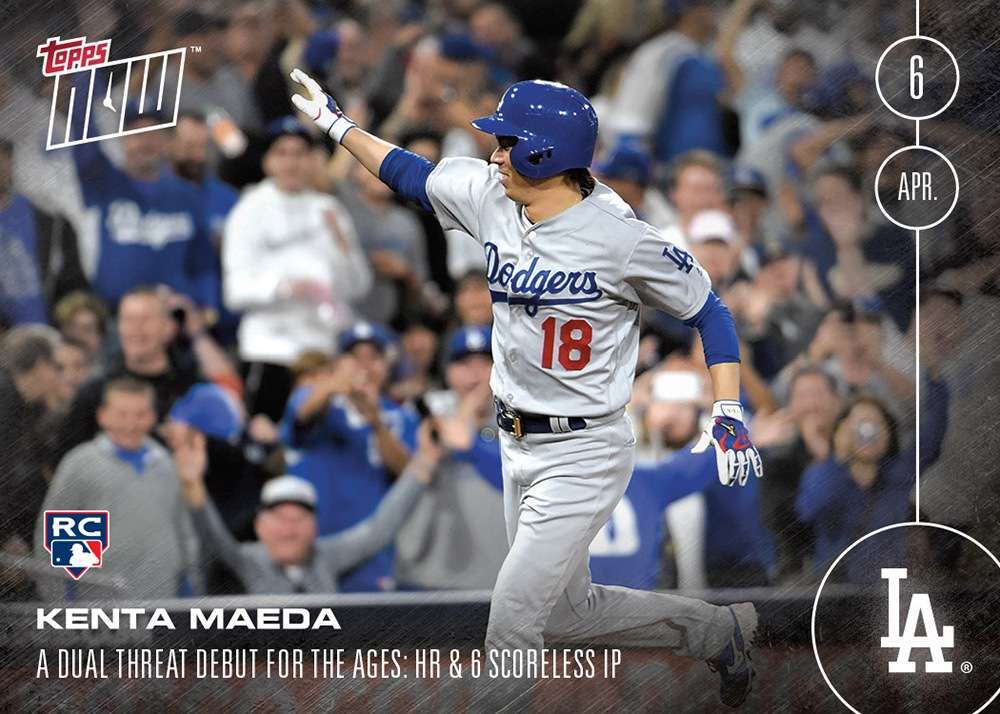
Kenta Maeda
2016 Topps NOW · #7 · RC · base
MLB debut: a home run at the plate and six scoreless innings on the mound. The clean early prototype: RC logo, exact debut date, decisive performance and a verified three-digit print run on one card.
- PRINT RUN
- 952
- EVIDENCE
- VERIFIED
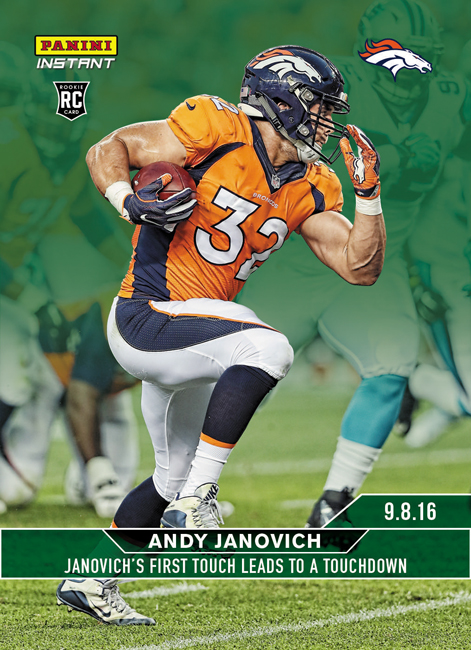
Andy Janovich
2016 Panini Instant Football · #6 · RC · base
His first NFL touch became a 28-yard touchdown. Panini called it his first-ever NFL Rookie Card. The card records the action itself, not a later season summary.
- PRINT RUN
- 78
- EVIDENCE
- VERIFIED
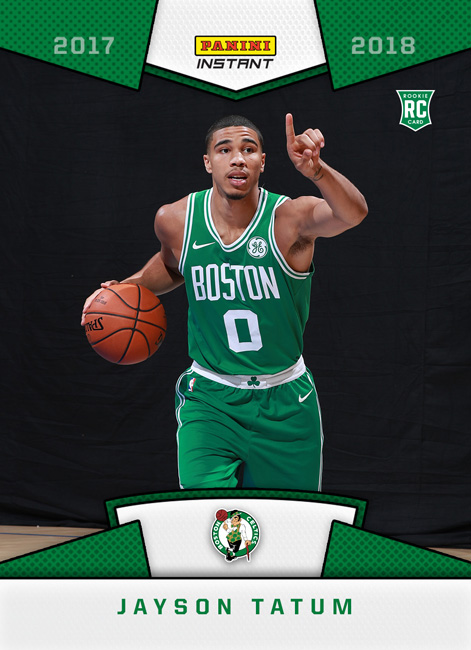
Jayson Tatum
2017–18 Panini Instant Photo Shoot First Look · #36 · RC · base
One of Tatum’s first official Celtics rookie cards, issued from the NBA Rookie Photo Shoot. Important as an early licensed NBA identity, but it is a photo-shoot card, not a game or league debut.
- PRINT RUN
- 472
- EVIDENCE
- VERIFIED
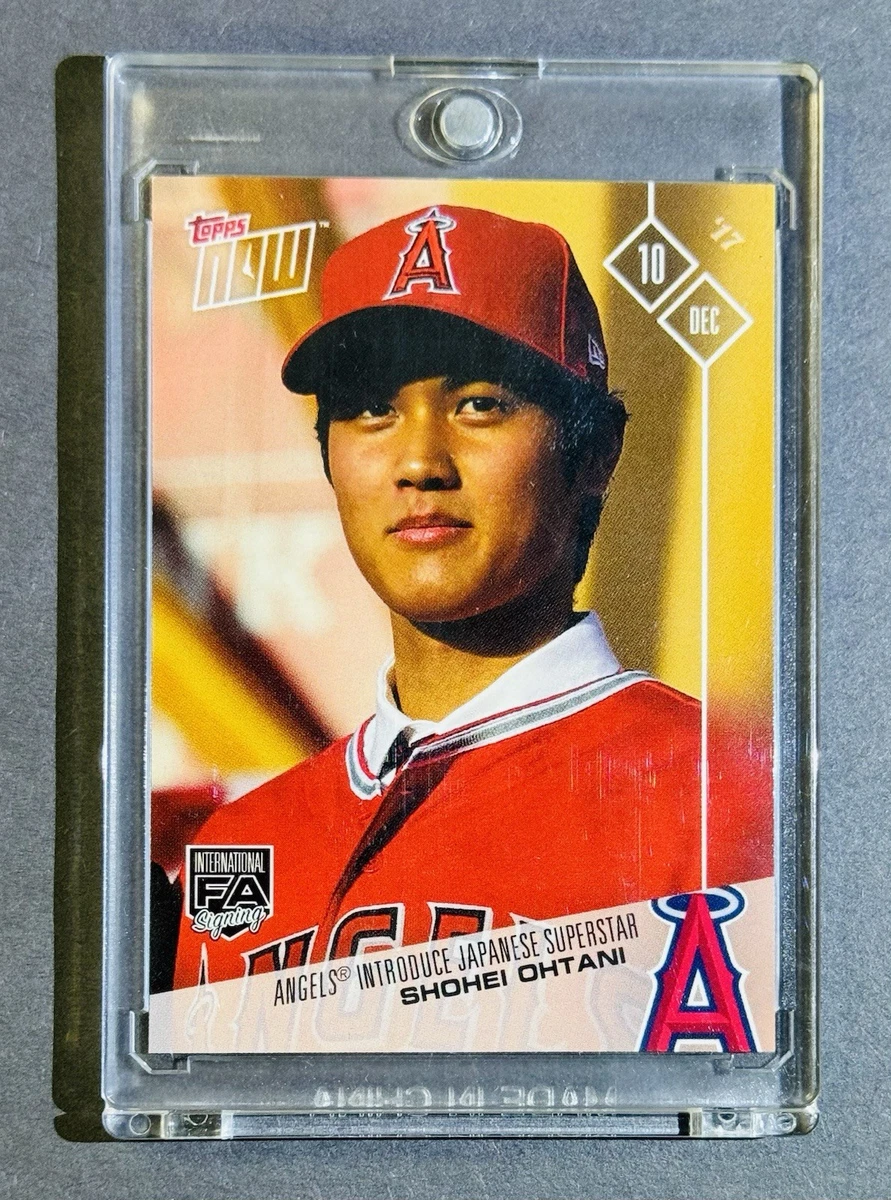
Shohei Ohtani
2017 Topps NOW Off-Season · #OS-80 · base
Ohtani’s first Topps NOW card in an Angels uniform after his signing. A foundational team card, not a chronological MLB debut card and not a definitive answer to the hobby’s rookie-card question.
- PRINT RUN
- 17,323
- EVIDENCE
- VERIFIED
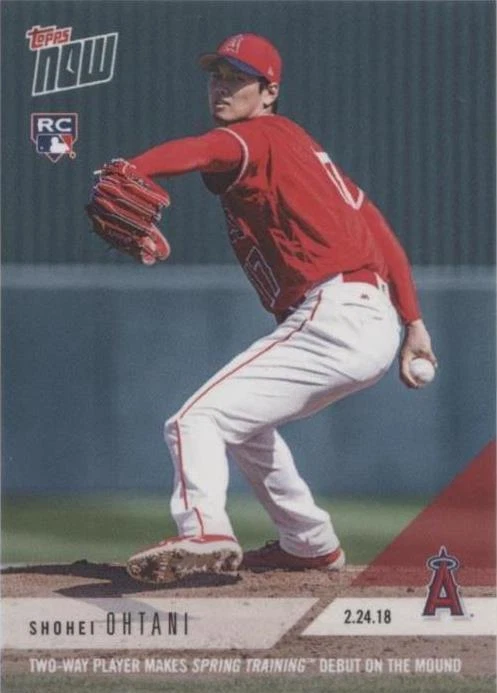
Shohei Ohtani
2018 Topps NOW Spring Training · #ST-4 · RC · base
His spring-training debut on the mound, with the MLB RC logo. An early RC-marked issue, but spring training is not the same event as an MLB regular-season debut. The distinction belongs in the label.
- PRINT RUN
- 11,384
- EVIDENCE
- VERIFIED
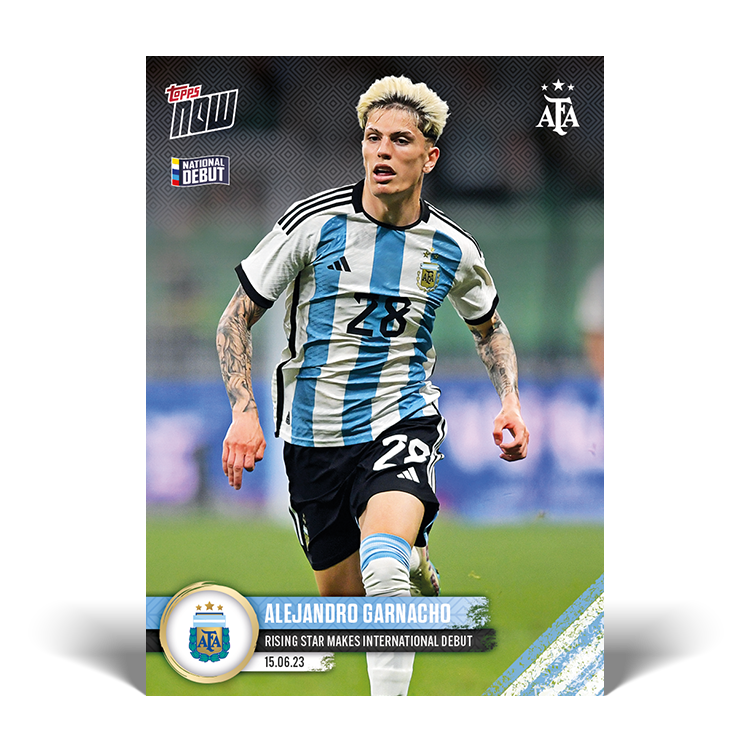
Alejandro Garnacho
2023 Argentina Topps NOW · #2 · National Debut · base
His senior Argentina international debut on 15 June 2023. The sample’s clearest national-team debut card: the designation is printed on the front and the exact final run is public.
- PRINT RUN
- 5,404
- EVIDENCE
- VERIFIED
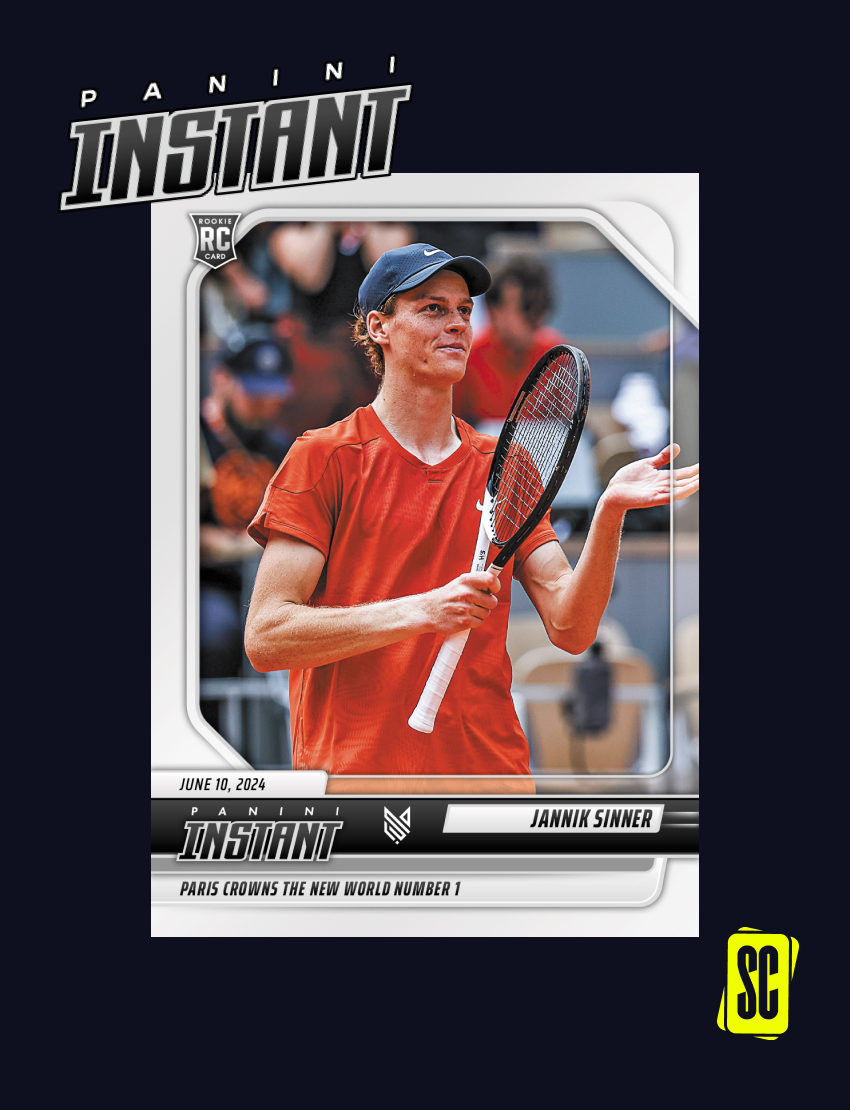
Jannik Sinner
2024 Panini Instant Tennis · #JS-1 · RC · base
Paris crowns Sinner world No. 1; the card carries Panini’s Rookie Card shield. The RC designation is real, but the event arrived years into his professional career. It is a publisher-defined rookie, not a career debut.
- PRINT RUN
- 6,784
- EVIDENCE
- VERIFIED
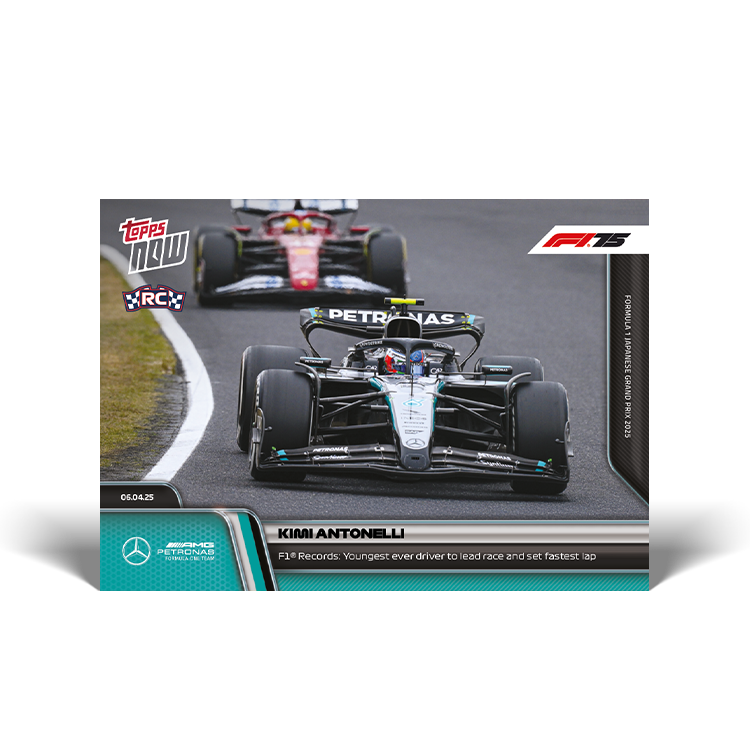
Kimi Antonelli
2025 Formula 1 Topps NOW · #28 · RC · base
Youngest driver to lead a Formula 1 race and set fastest lap. A first-season, RC-marked record card with a verified final base print run of 1,714.
- PRINT RUN
- 1,714
- EVIDENCE
- VERIFIED
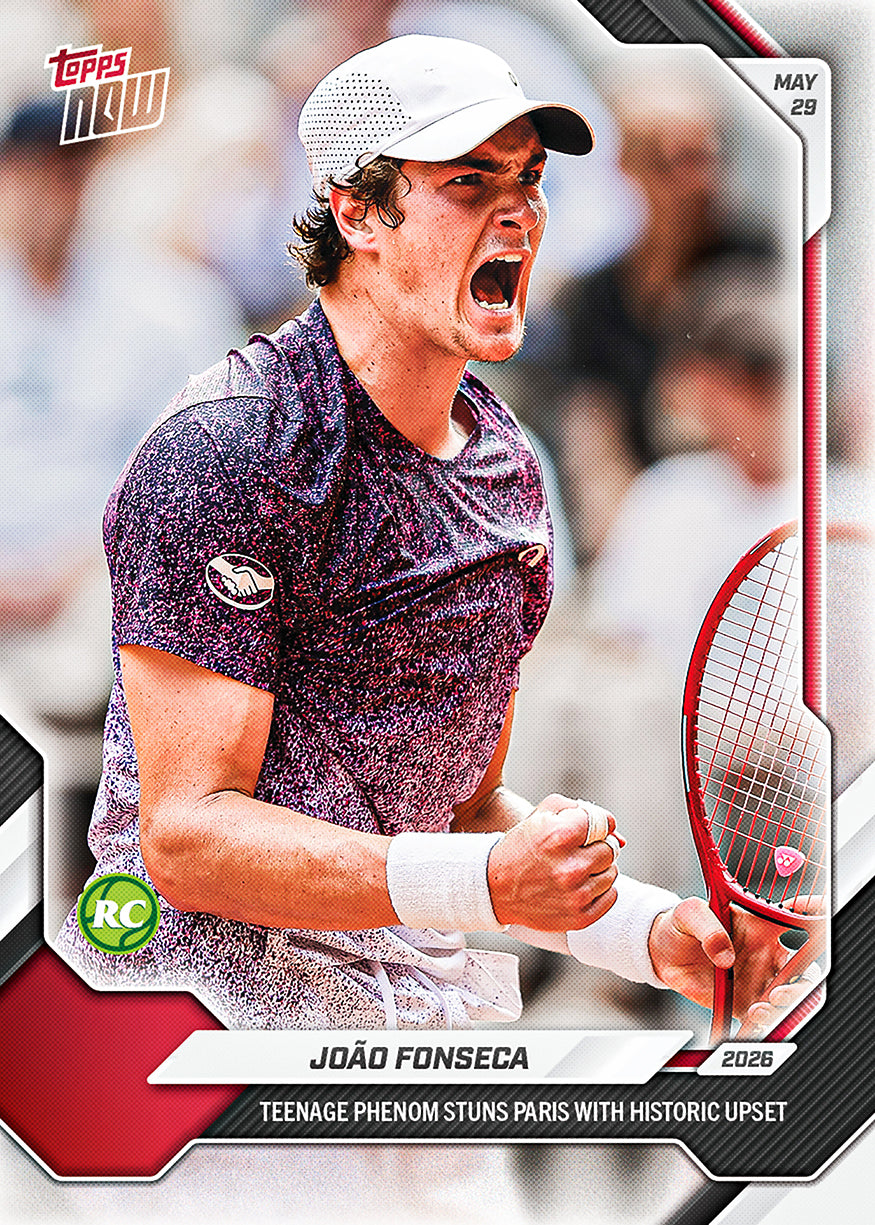
João Fonseca
2026 Topps NOW Tennis · #15 · RC · base
The teenager’s historic upset in Paris. A legitimate early Topps NOW Tennis RC and a breakthrough card, but the card does not document his professional debut.
- PRINT RUN
- 5,616
- EVIDENCE
- VERIFIED
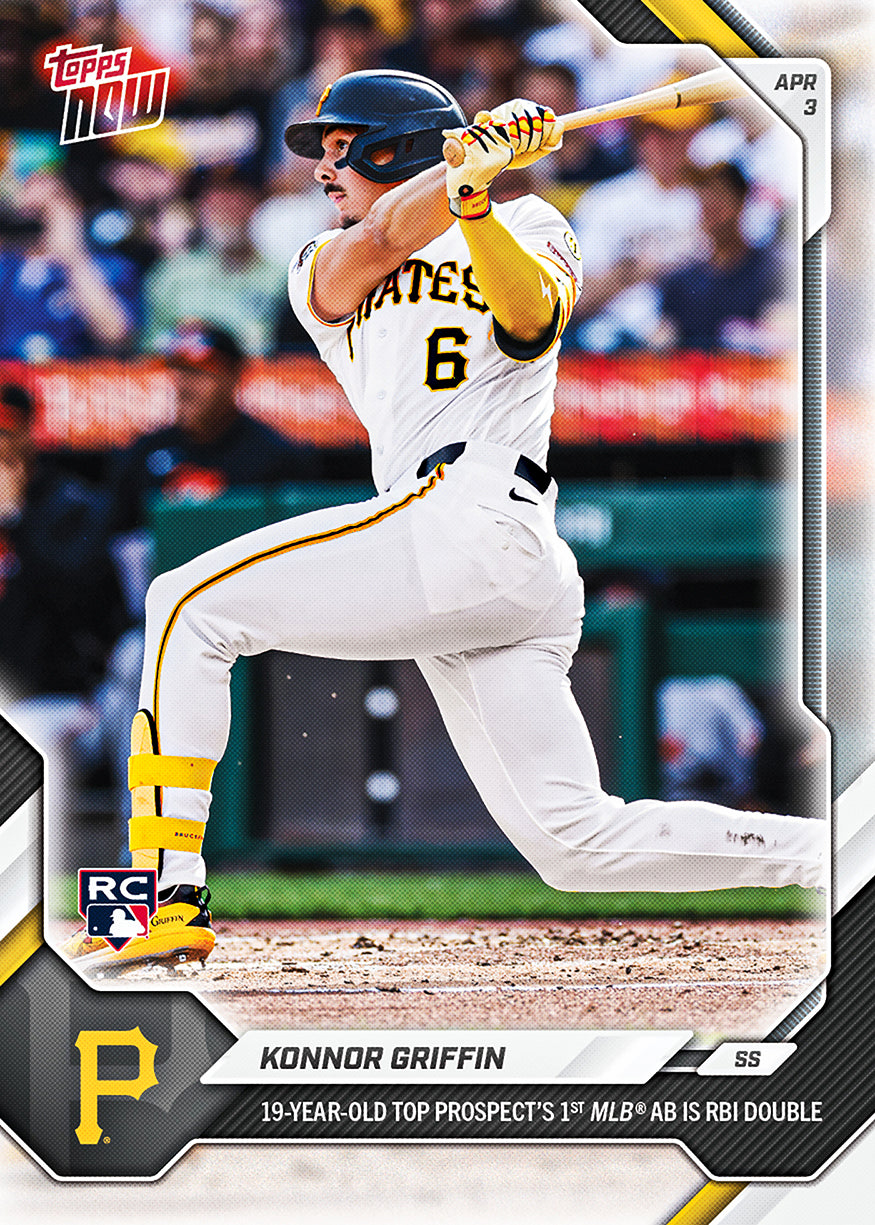
Konnor Griffin
2026 MLB Topps NOW · #49 · RC · base
His first MLB at-bat produced an RBI double. The biggest primary-demand case in the sample. Its 93,252-copy run proves attention, not scarcity; the debut sentence remains exceptionally clean.
- PRINT RUN
- 93,252
- EVIDENCE
- VERIFIED
04 / WHAT PRINT RUNS SAY
Rookie describes the card type. It does not describe supply.
The sample’s ten confirmed runs total 142,979 copies. Janovich #6 printed 78; Griffin #49 printed 93,252. A similar label spans a greater than 1,195-fold supply difference. Print run must remain an independent variable.
The lowest print run does not prove the best demand. The highest print run does not destroy a canonical card. Supply, meaning and price need separate evidence.
05 / CONCLUSIONS
True debuts have the cleanest sentence. First licensed cards may have the strongest market.
Debut integrity
Garnacho #2, Maeda #7 and Griffin #49 print the origin event on the card itself. They are easy to explain without relying on an external guide.
First-license importance
Tatum #36 and Ohtani OS-80 can be foundational without documenting a competitive debut. Their importance should be described precisely, not dismissed or exaggerated.
The logo does not set chronology
Sinner JS-1 shows the extreme: a genuinely RC-marked card released when he was already world No. 1. It is a major story, but not a debut story.
The archive opportunity
Topps NOW and Panini Instant can build more precise career timelines than an annual checklist. The editorial value is preserving identity, date, image, print run and market evidence together.
Market note: this study classifies identities; it does not publish price targets. A $7.20 CGC 9.5 Griffin #49 sale is evidence for that copy and condition, not a silent comp for the raw base. Cards are illiquid and produce no cash flow.
06 / SOURCES + LIMITS
Sources, print runs and what we still do not know.
Topps and Panini pages establish program origins, identities and publisher facts. Beckett archives are used in two cases for historical print runs no longer shown on an active product page. eBay is linked as an exact supply route, never as automatic valuation.
Evidence update: Antonelli #28’s final base print run is verified at 1,714; the exact eBay identity and market record agree.