Yount, Misiorowski and a World Series win 44 years in the making. Plus a new NBA class, a Bears pairing, Panini’s college football, and the cards behind Curry’s Paris and two emotional home wins.
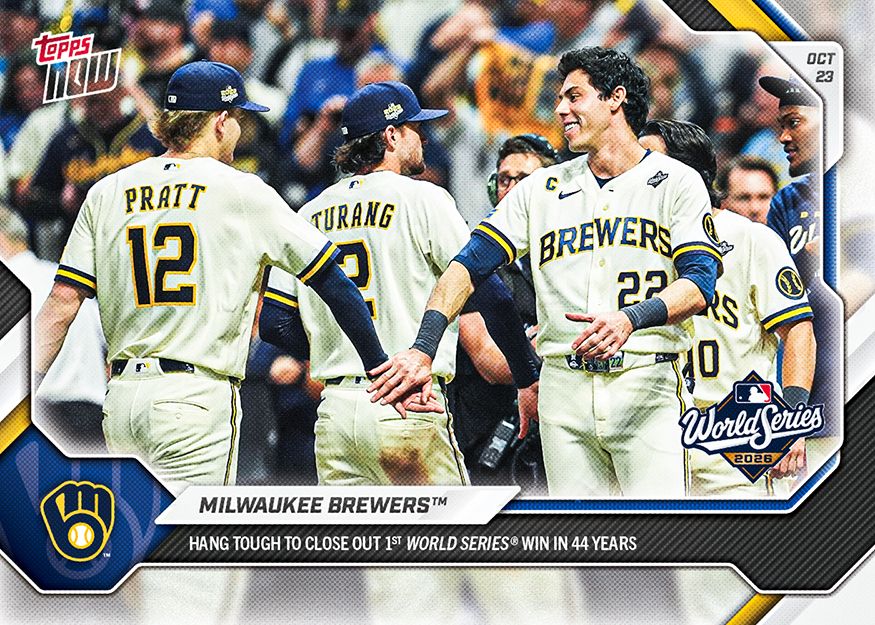
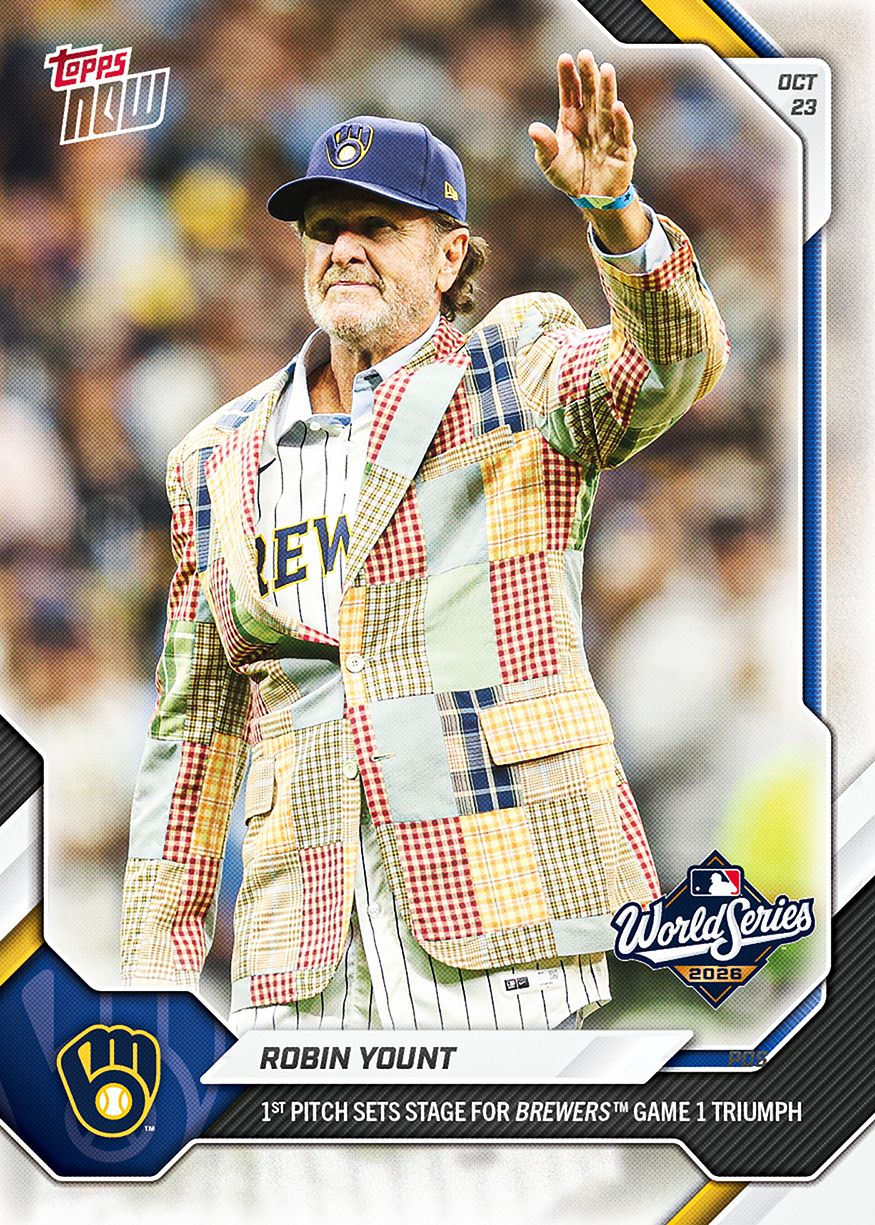
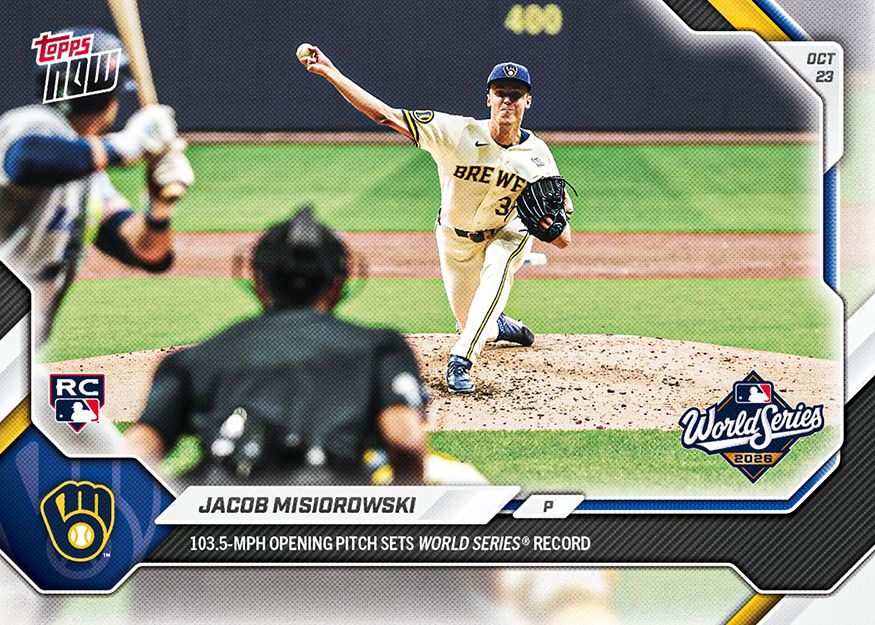
Topps has divided Milwaukee’s October 23 World Series game into separate memories. Robin Yount takes the ceremonial first pitch on #810. Jacob Misiorowski supplies a 103.5-mph opening pitch on #811. The Brewers celebrate on #815, whose caption marks the club’s first World Series game win in 44 years. Reading them together is more revealing than treating each release as another order window.
Yount is the human-interest card. His patchwork jacket and greeting to the crowd put a familiar figure inside a new occasion. There is no need for a batting statistic on the front. The ceremony is the subject, and the portrait has the room to let it be one.
Misiorowski’s card changes the pace. The horizontal frame follows the pitching action, and the speed in the caption supplies the fact you remember. It is the most sharply defined play in this three-card selection. The autograph redemption shown among the product options is a separate possible replacement; the photograph here is the ordinary base card.
Our one-card choice is the team’s #815. Yelich’s open hand, his teammates and the wide frame make the win feel shared. It records the outcome without pretending the series is over. For a fuller account, add #810 and #811 in that order: the ceremony, the first pitch and the release after the final out. The photographs give the sequence its shape.
Topps records Yount throwing the ceremonial first pitch before Milwaukee’s Game 1 victory. The card dates the appearance to October 23. The photograph makes this the human-interest choice in the Brewers group: Yount in a patchwork jacket, greeting the crowd, rather than another batting action shot. Pair it with #815 for a two-card account of the night.
Topps puts the speed of the opening pitch at the centre of #811. The horizontal image leaves room for the full pitching action and the World Series mark. Beside Yount’s ceremonial first pitch and the team’s celebration on #815, this is the point where the occasion becomes a game. Of the three, it is the card for someone who remembers the first pitch as vividly as the final out.
The team card marks Milwaukee’s first World Series game victory in 44 years, on October 23. It does not mark a championship. If you want one card for the game, this is the broadest account: teammates celebrating, a horizontal photograph and the long wait written into the caption. The player cards each isolate a different play.
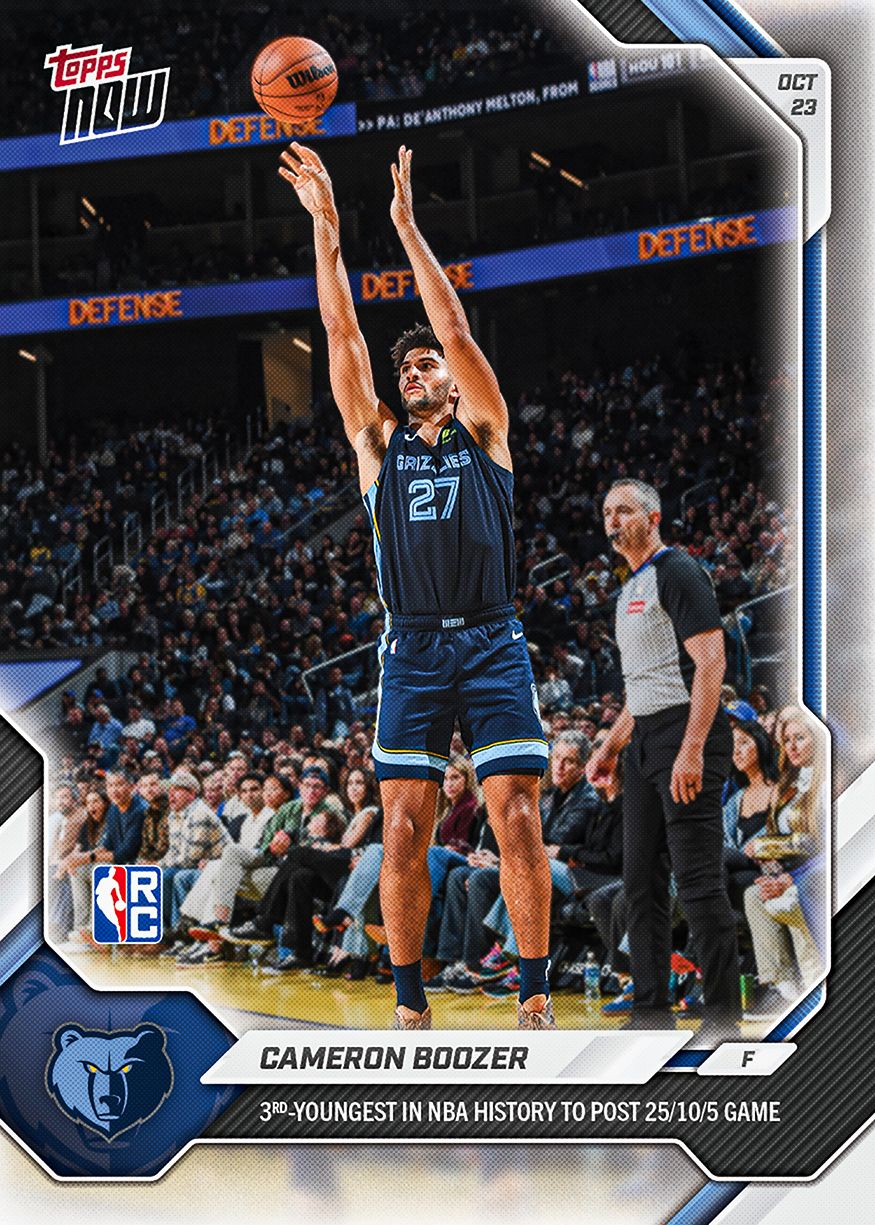
The useful detail is below the name: Topps identifies Boozer as the third-youngest NBA player with a 25/10/5 game. It is a more specific reason to keep this Grizzlies card than the RC shield alone. The photograph catches the release of his shot, with the arena’s DEFENSE signs behind him. Alongside Acuff’s scoring record and Lendeborg’s all-around line, #20 makes the first week of this rookie class readable through performances.
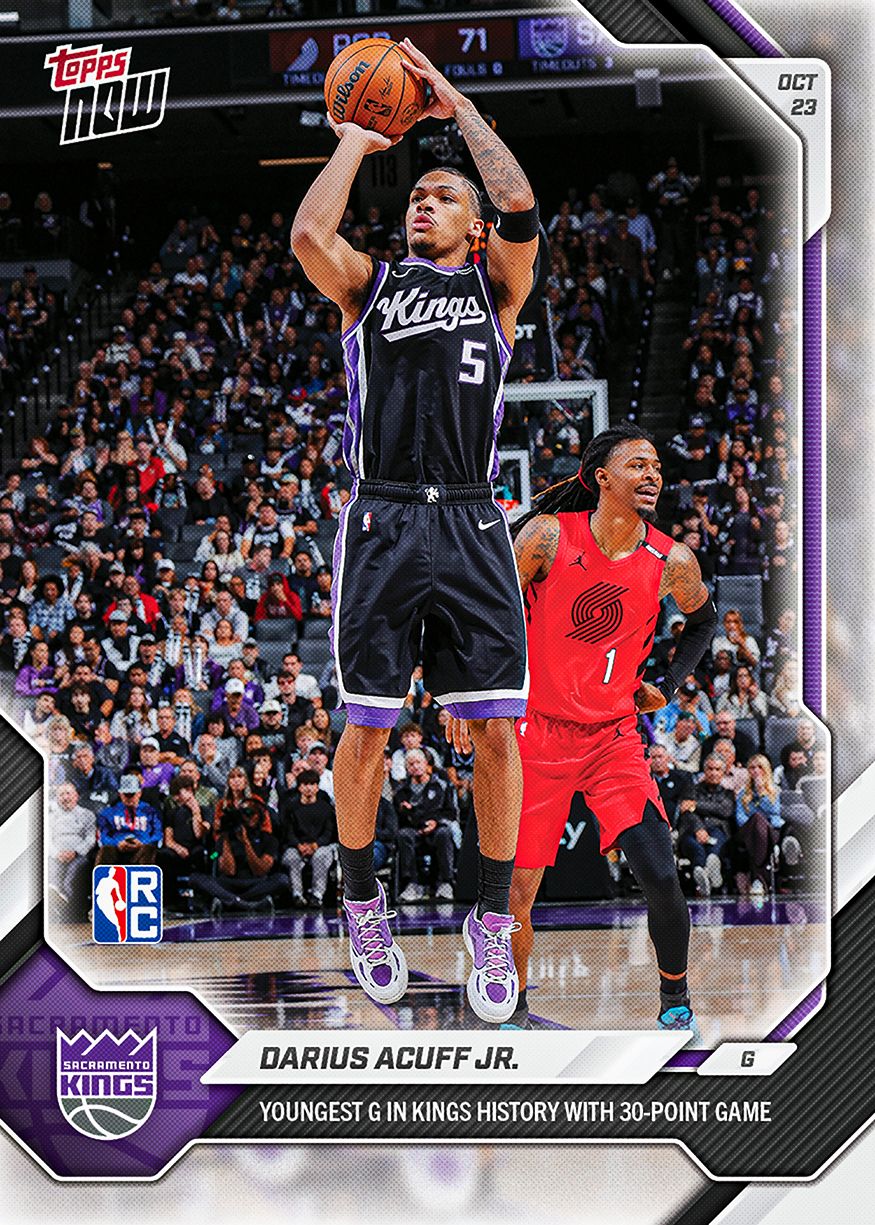
The October 23 card identifies Acuff as the youngest guard in Kings history to record a 30-point game. The artwork carries an RC logo. The attraction is the specific club record. That gives #21 a different place in a rookie collection from a draft-night portrait or a debut card. Keep those milestones separate when building a player timeline.
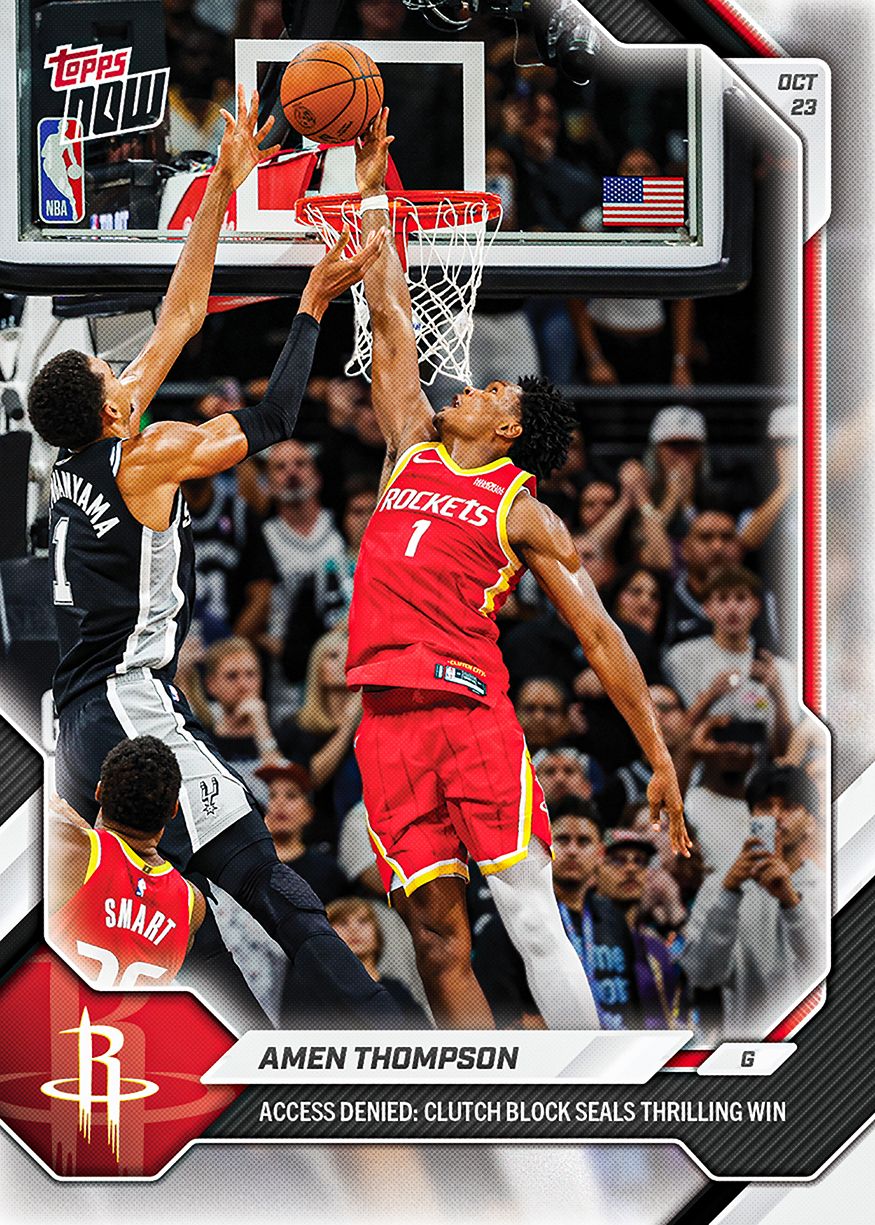
Topps commemorates a late block that secured Houston’s win on October 23. The photograph shows Thompson meeting the ball above the rim. The ball, rim and defender fit in one tight frame, making the decisive action legible even without the caption. A useful counterpoint to a page full of rookie scoring milestones.
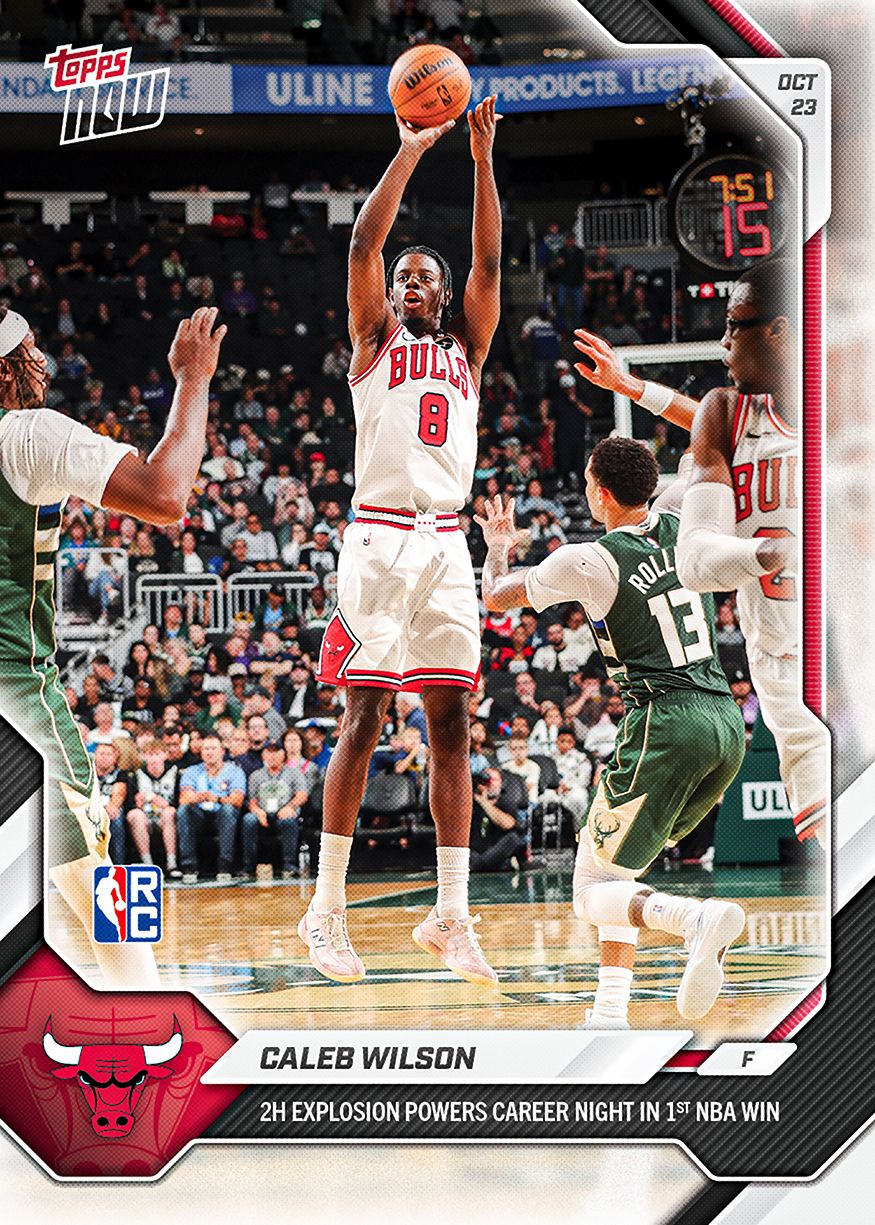
Wilson’s first NBA win gives #25 a place in the Bulls rookie’s opening-week story. Topps credits a strong second half and a career-best night on October 23; the photograph catches him shooting, with the RC shield tucked into the design. Beside Acuff’s Kings scoring record and Lendeborg’s 18/13/6, this is the quieter milestone of the group: the first result a new player gets to celebrate with his team.
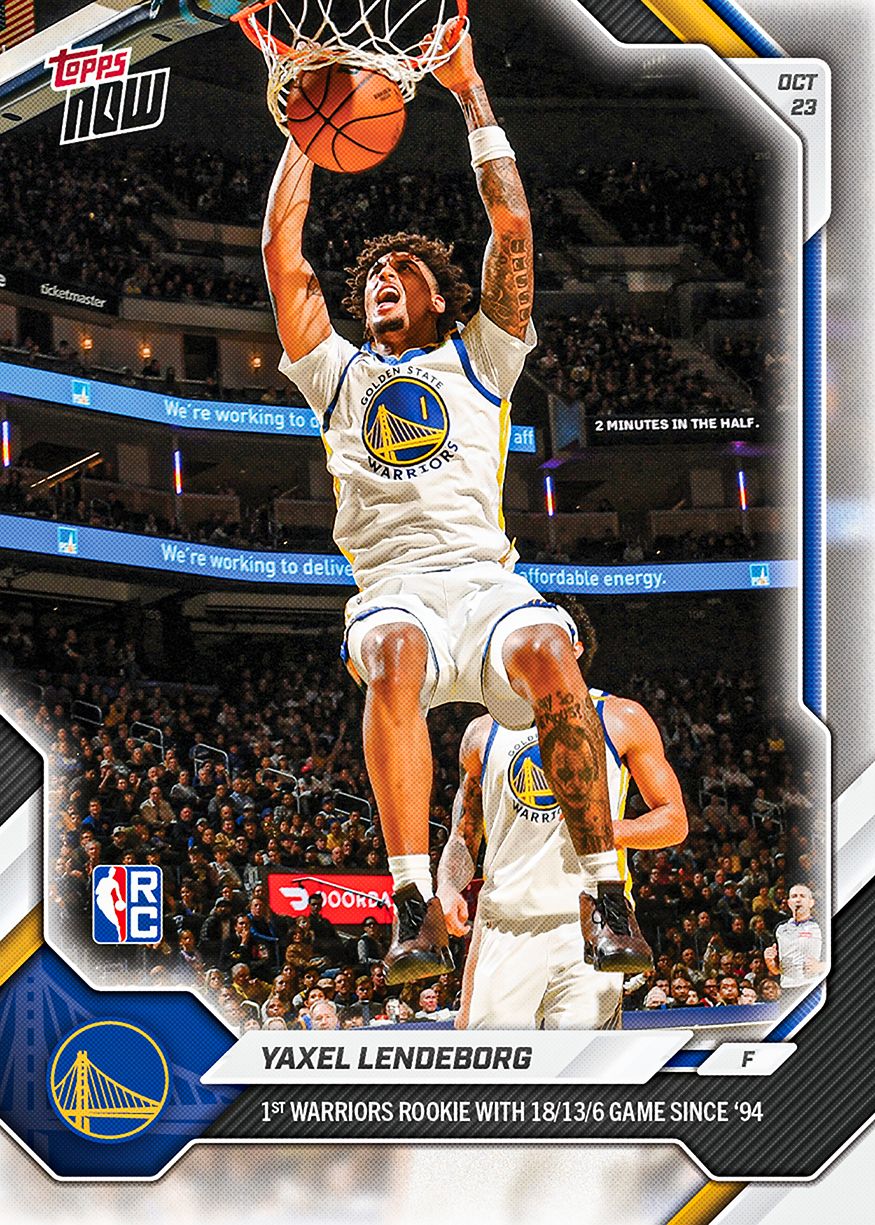
The publisher’s front caption identifies an 18/13/6 game and calls Lendeborg the first Warriors rookie to do it since 1994. The card is dated October 23 and carries RC branding. Acuff’s #21 is about scoring; Lendeborg’s #22 is about an all-around line. Together they show why selecting rookie cards by the event can produce a more interesting collection than buying every RC logo.
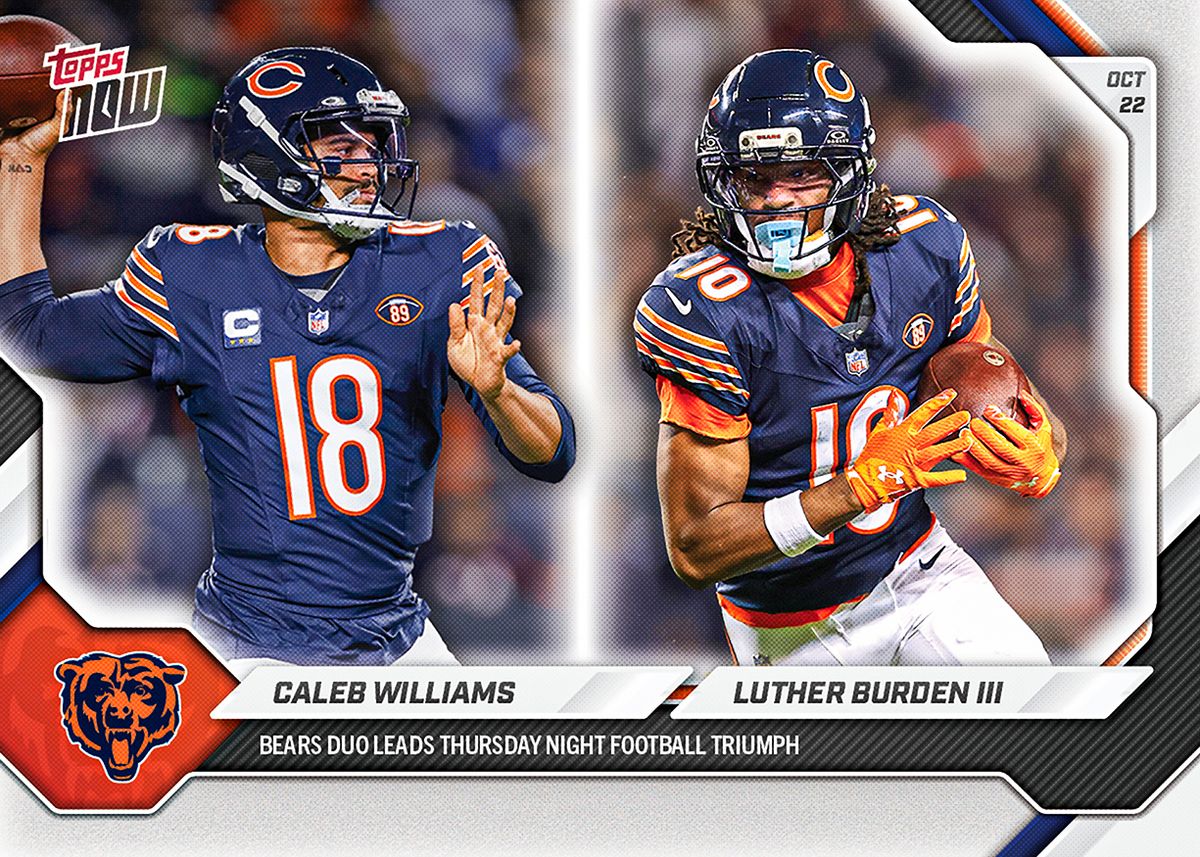
The dual-player card marks Chicago’s Thursday-night victory on October 22, with Williams and Burden pictured side by side. This is a pairing card: quarterback on one half, receiver on the other. It suits a Bears season story more naturally than an individual-player checklist, and its horizontal format breaks up the run of single-player portraits.
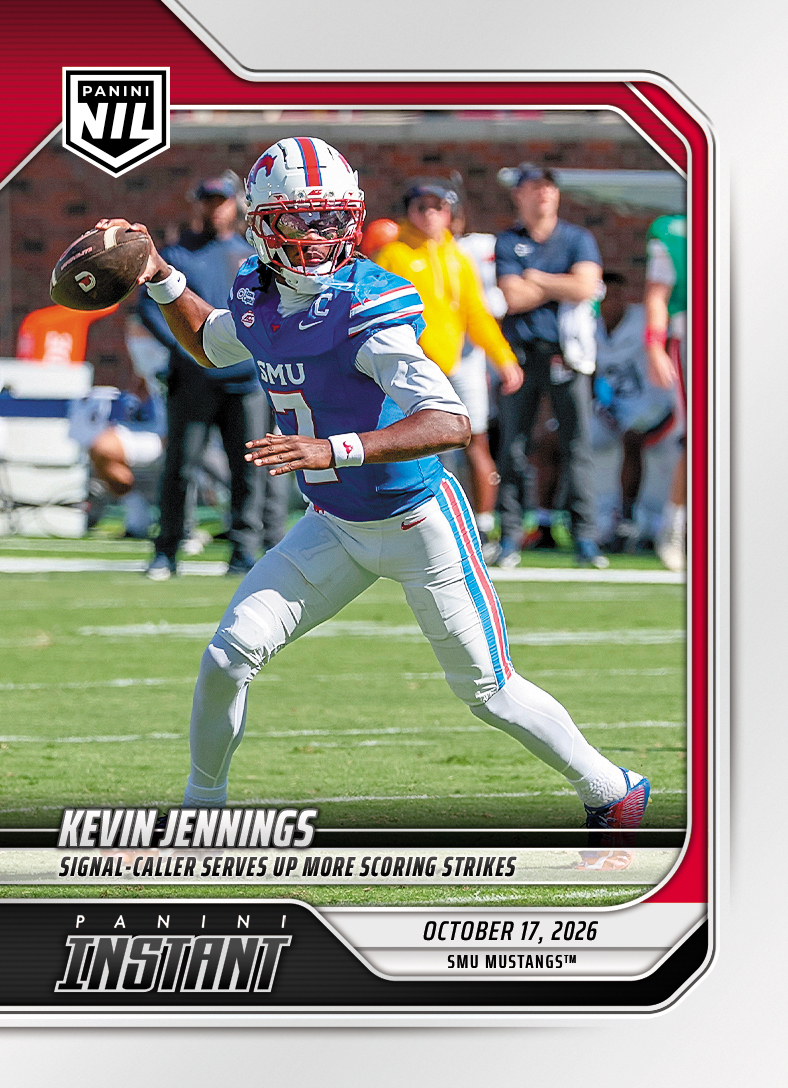
Panini’s reverse records 246 passing yards and two touchdowns for Jennings in SMU’s 23–13 win over Virginia on October 17. The reverse confirms card number 7-KJE. A college-team entry with a full game account on the reverse. It offers a different collecting thread from the pro-league rookie releases: follow an SMU season through the players who shaped it.
2026 Instant NIL College Football · #7-KJE · Raw base
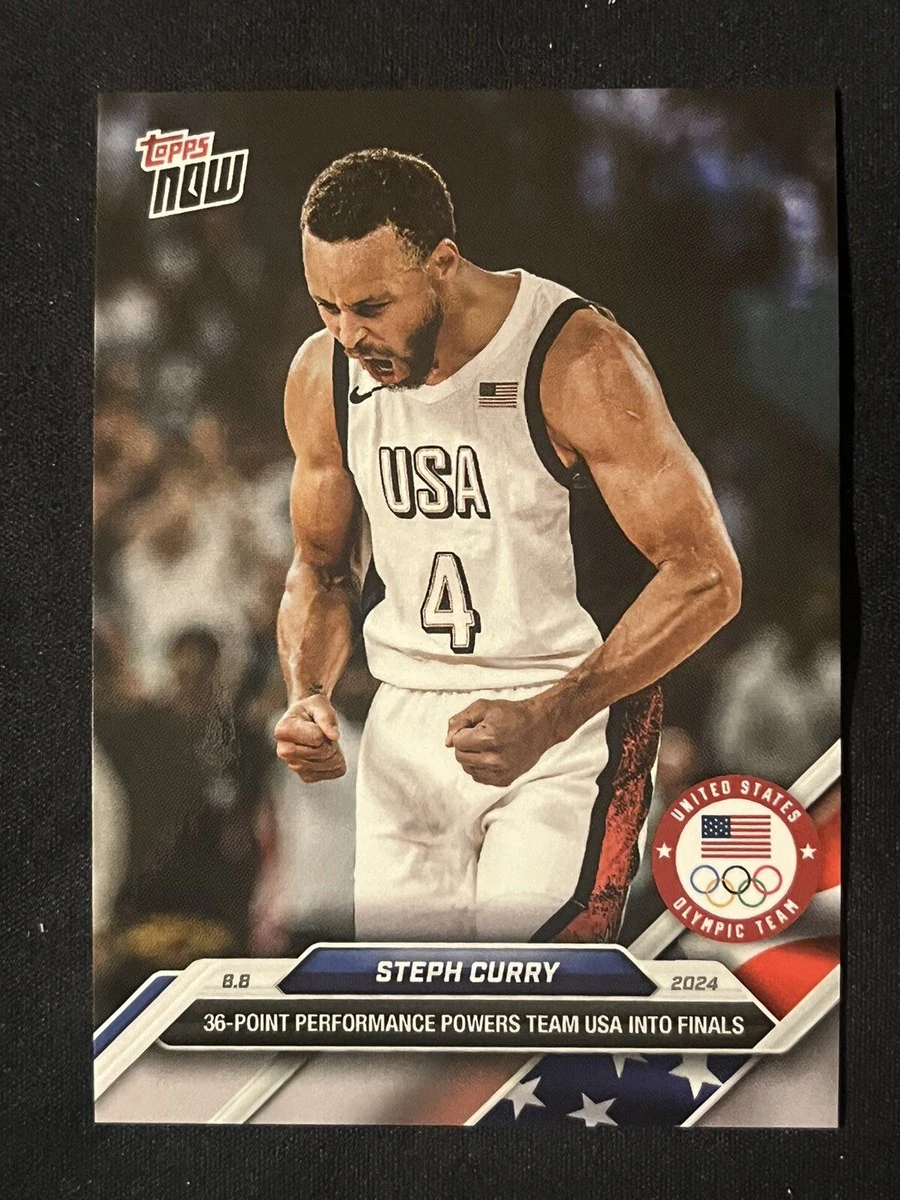
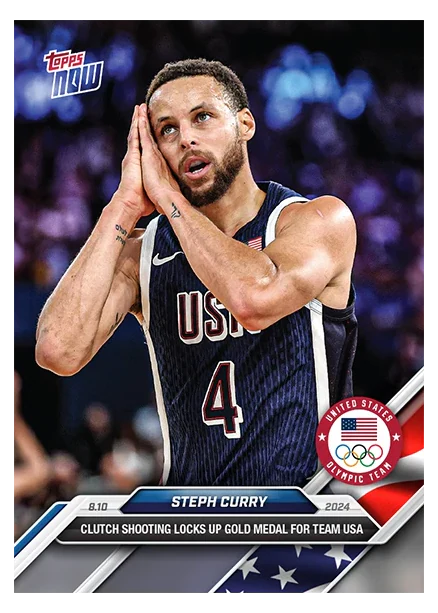
2024 Olympic Games Topps NOW · #22 · Base2024 Olympic Games Topps NOW · #27 · Base
01 / EDITOR’S NOTE
Curry’s Paris needs two cards.
The famous photograph and the hardest game are not the same moment.
Number 27 is the obvious starting point. Curry’s Night Night gesture is a complete piece of visual shorthand: you can recognise Paris without reading the caption. It is the image of a tournament resolved. The four late threes against France have already happened; the worry has gone out of the picture.
Number 22 brings the worry back. Serbia led by 17 in the semifinal. Curry’s 36 points and nine threes were the performance that kept the final possible. Place the two fronts side by side and the ordering matters: first the work of staying in the tournament, then the freedom to celebrate it. A collection that jumps straight to the gold-medal photograph misses that tension.
Our choice is #27 if there is room for only one. The gesture is the stronger standalone image. But #22 is the card that makes the pair worth assembling. The two-card story is better than either card’s individual caption: it shows how a memorable ending can depend on a less frequently pictured night.
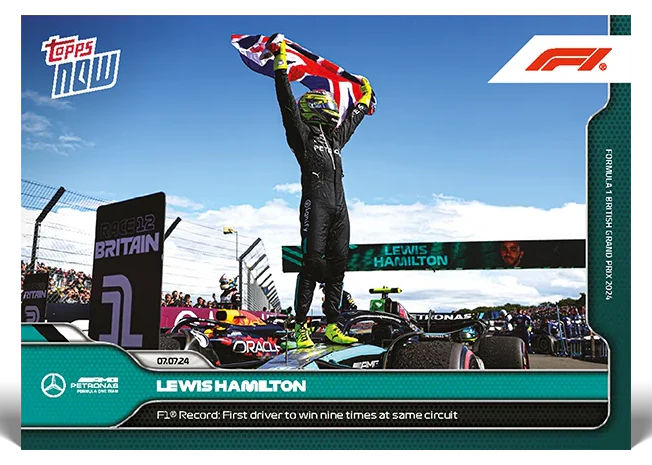
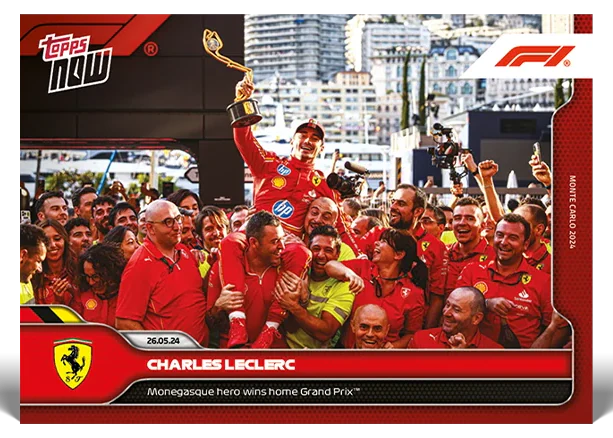
2024 Formula 1 Topps NOW · #39 · Base2024 Formula 1 Topps NOW · #19 · Base
02 / EDITOR’S NOTE
Home wins, after the waiting.
Hamilton at Silverstone. Leclerc in Monaco. Two celebrations that need a backstory.
The photographs are taken after the racing, which is exactly why they work. Hamilton’s #39 shows the flag over the car. Leclerc’s #19 shows the driver held above Ferrari’s people. Neither needs an on-track overtake to explain the afternoon. The subjects have finally reached the part they could not plan: the release of emotion.
Hamilton arrived at the 2024 British Grand Prix without a win for 945 days. Leclerc had already put his car on Monaco pole twice without converting either opportunity into victory. A ninth win at Silverstone and a first win at Monaco look different in a record book. In these two photographs, both are answers to a long wait.
Monaco is our choice for a collection about Leclerc himself. The team lifting him makes the relationship visible. Hamilton’s Silverstone card belongs in the final Mercedes chapter, where the flag and the celebration carry the knowledge that his time there was ending. The point of pairing them is the contrast: a first home victory beside a ninth, with neither feeling routine.
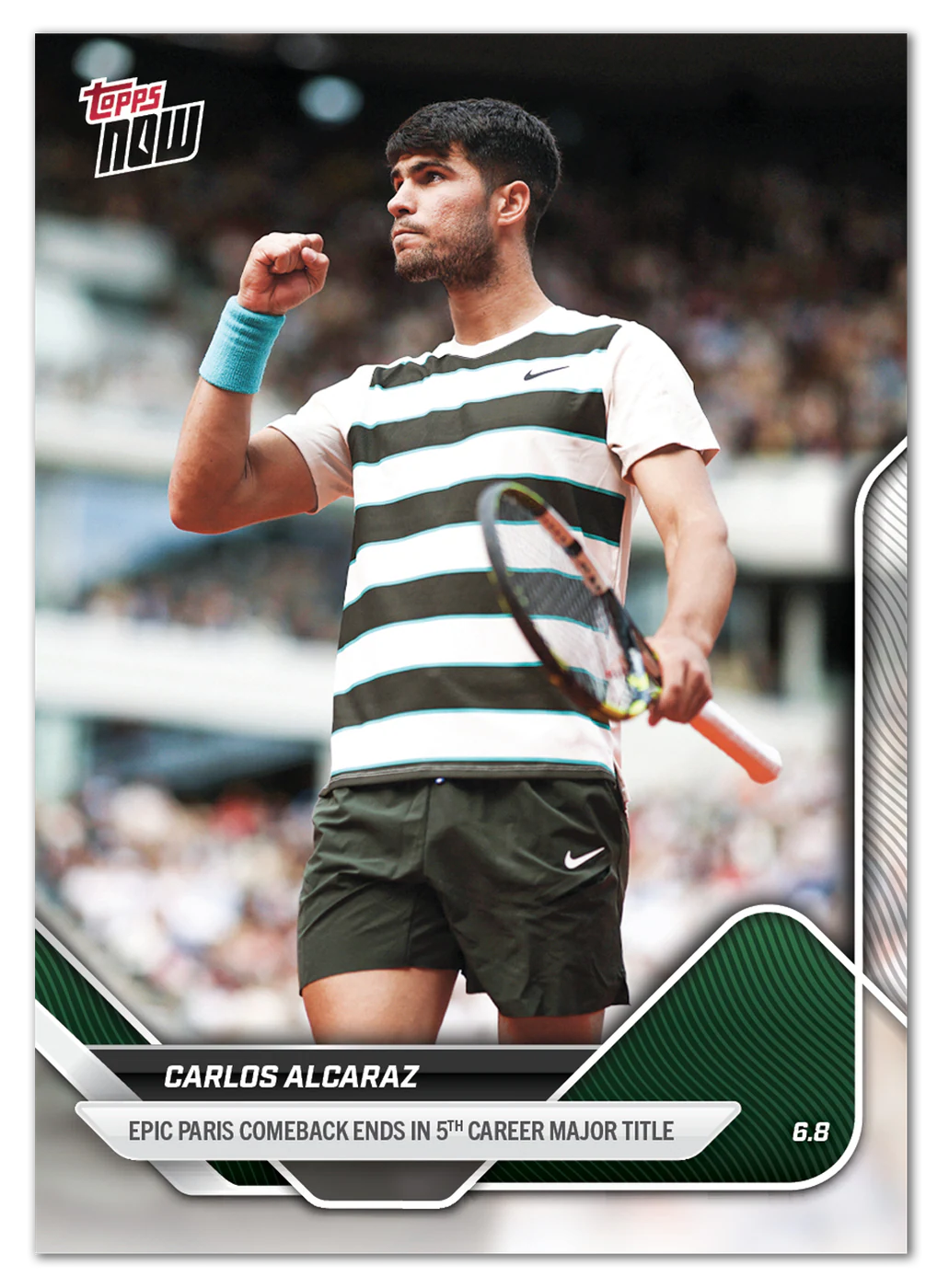
The scoreline says Alcaraz won. It leaves out the three championship points he saved against Sinner. The 2025 Roland-Garros final became the longest men’s final in the tournament’s history, and TCA1 gives that afternoon a place in a collection. A fifth major could have produced another trophy card in a career chronology. This one takes you back to a match that kept refusing to end. For an Alcaraz collection built around performances, this is the first card we would put on the page.
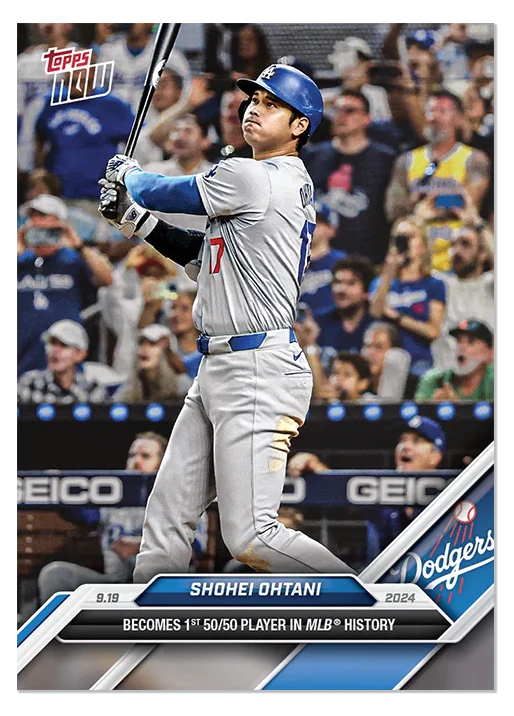
Six hits, three home runs, two stolen bases and ten RBI. Ohtani’s afternoon in Miami was bigger than the milestone printed on #722: he ended the day on 51 home runs and 51 steals, with the season still running. The image catches him watching the ball after the swing. The caption identifies the day; the box score explains why the card holds your attention. This is the original English NOW release, separate from the later Topps 50/50 boxed set.
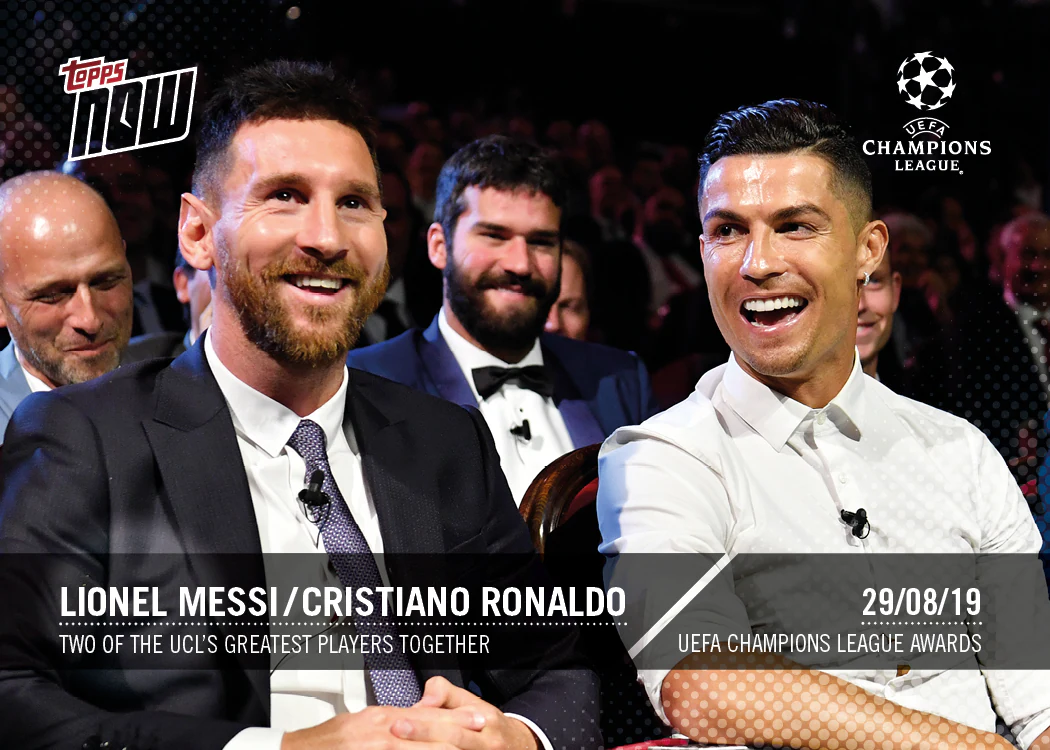
Messi and Ronaldo usually occupy different pages of a collection. Their meeting at the 2019 UEFA awards puts them in one frame, away from a pitch and a scoreboard. That change of setting is the appeal of #7. Between individual cards full of goals and trophies, the shared photograph gives two parallel careers a point of contact. It belongs between their pages, where the rivalry becomes a conversation.
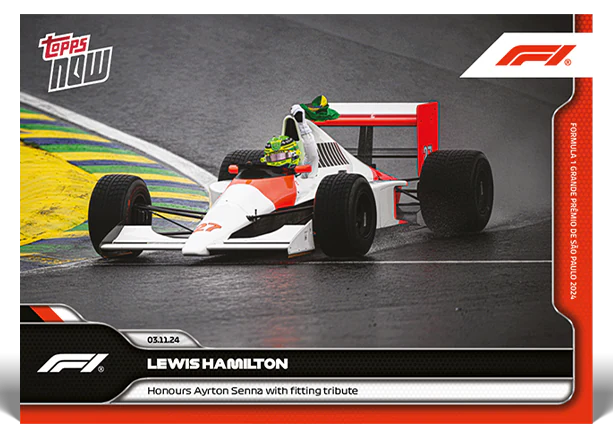
The white-and-red McLaren at Interlagos gives this Hamilton card a different purpose. His 2024 tribute to Senna is a sporting memory about another sporting memory. There is no victory to add to Hamilton’s total here; the setting and the car explain why Topps made the card. Beside Silverstone #39, #68 connects two kinds of achievement: what a driver does himself and the history he chooses to honour.
 Robin Yount · #810
 Jacob Misiorowski · #811