KEEP THE DATA CURRENT
Follow the next
confirmed print run.
Get final Topps NOW and Panini Instant numbers when publishers post them, plus one considered card note each week.
The curve breaks at Eala
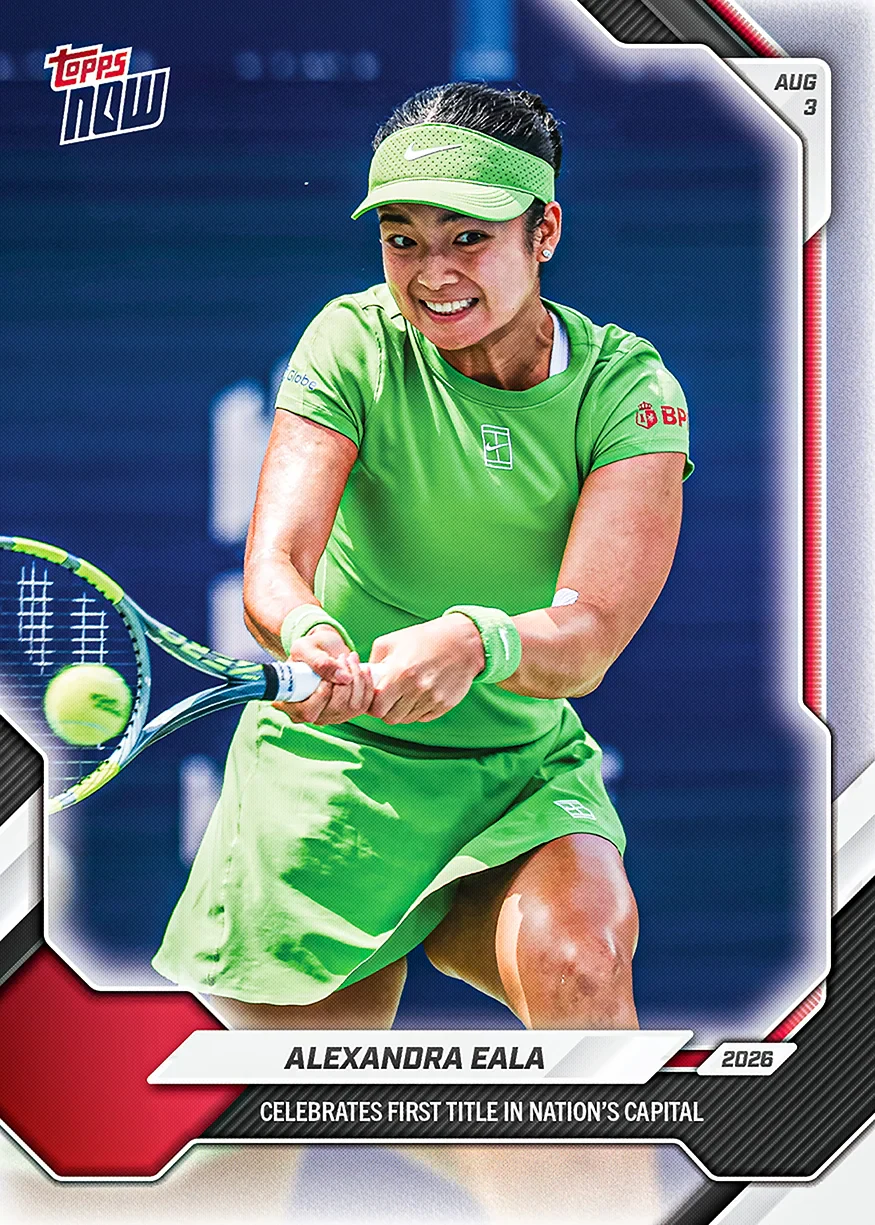
Seventeen cards had already told us this was a small, uneven category. Then Alexandra Eala #18 closed at 17,380 copies and changed the shape of the page. One first-title card now represents 29.1% of all 59,770 base copies in the opening 18-card archive.
The median card printed 1,515. The average is 3,321. That gap is the point: a typical release and a breakout release are not living in the same demand environment, even when they share the same Topps NOW Tennis header.
The archive is complete through #18: 18 exact identities, 18 publisher-confirmed final print runs.
What the top three had that the field did not
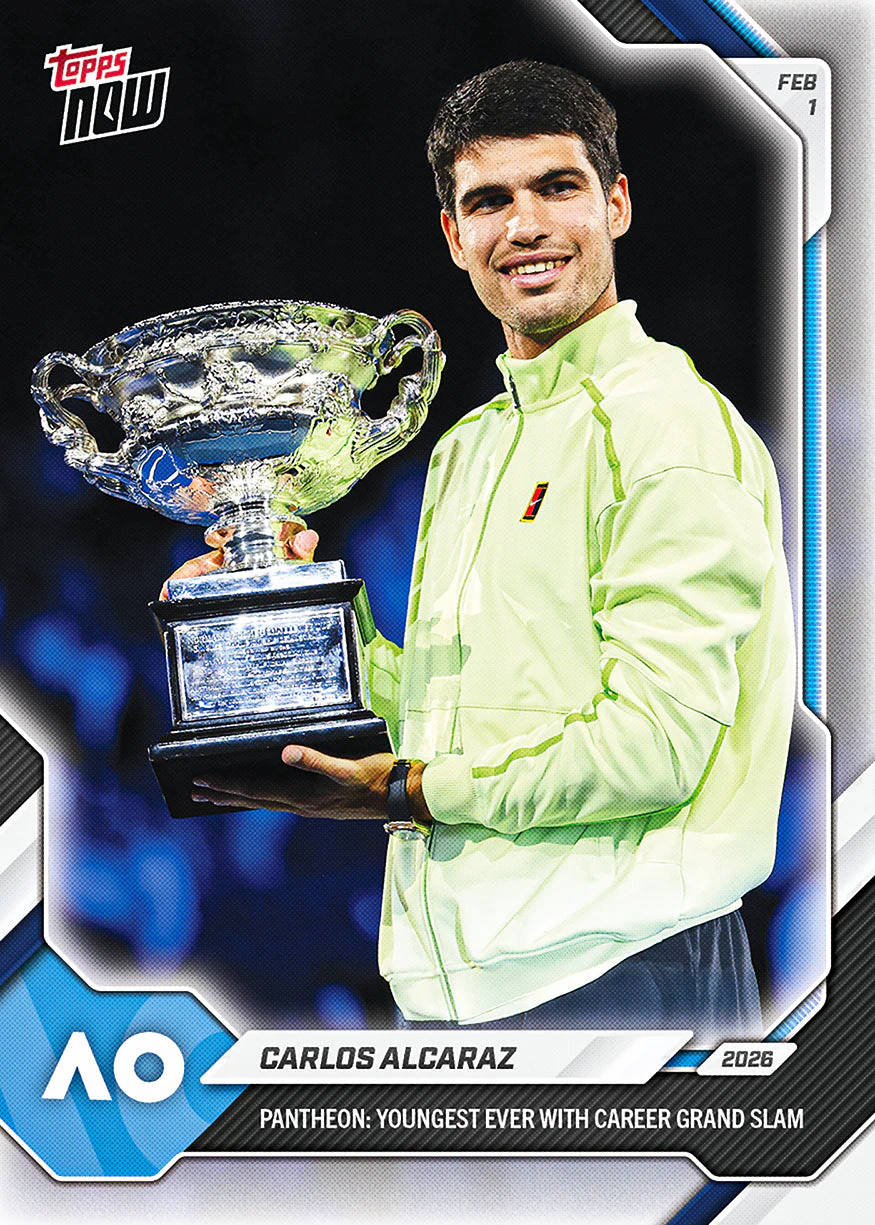
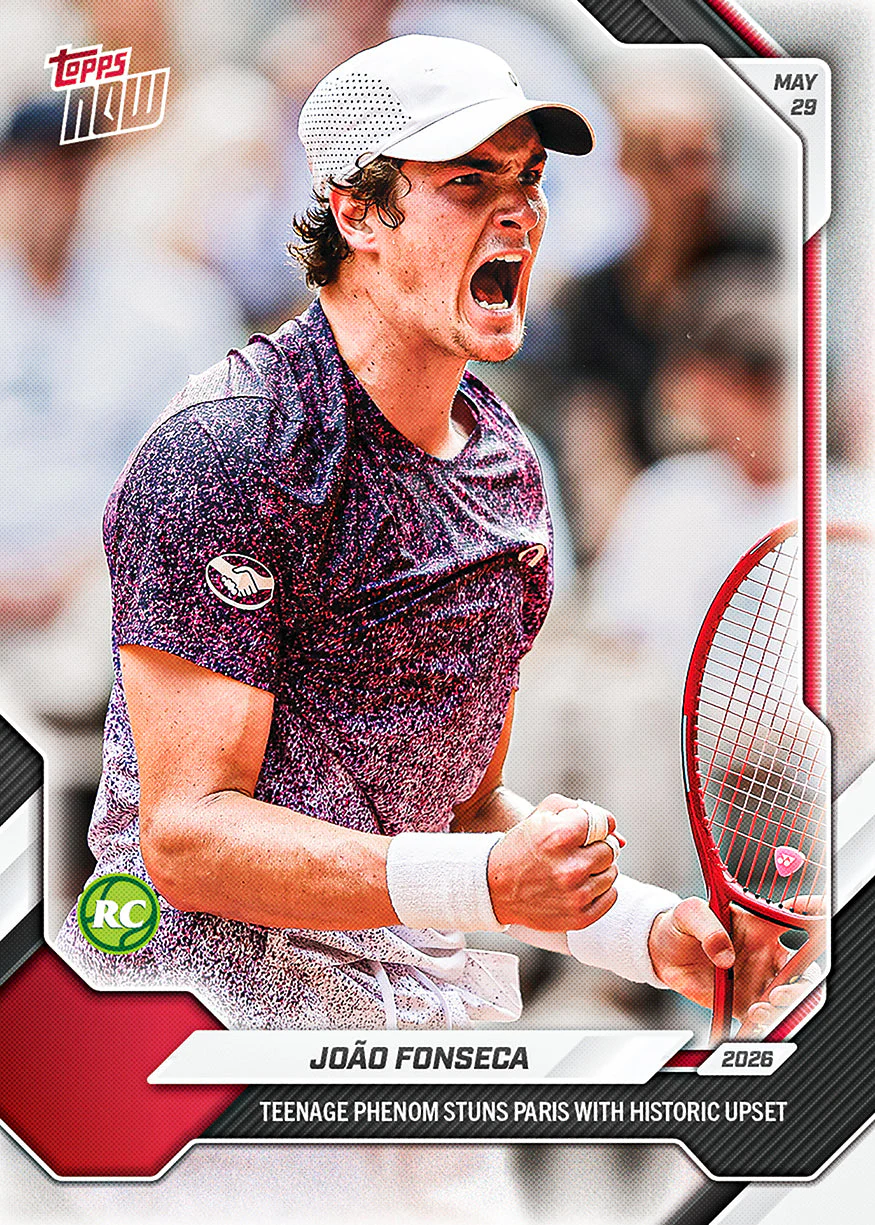
Eala #18 is a first-title card. Carlos Alcaraz #11 records the youngest men’s career Grand Slam. João Fonseca #15 carries an RC mark and a teenage upset. Their stories fit on one line, which is exactly how an on-demand card travels beyond the order-window regulars.
Together they printed 33,828 copies, or 56.6% of the reviewed supply. That is strong evidence of primary attention. It does not promise resale liquidity, but it destroys the lazy idea that a bigger print run means collectors cared less.
- Eala #18 · 17,380 copies
- Alcaraz #11 · 10,832 copies
- João Fonseca #15 · 5,616 copies
- Top-three share · 56.6% of reviewed base supply
419 copies is a research lead, not a bargain sticker
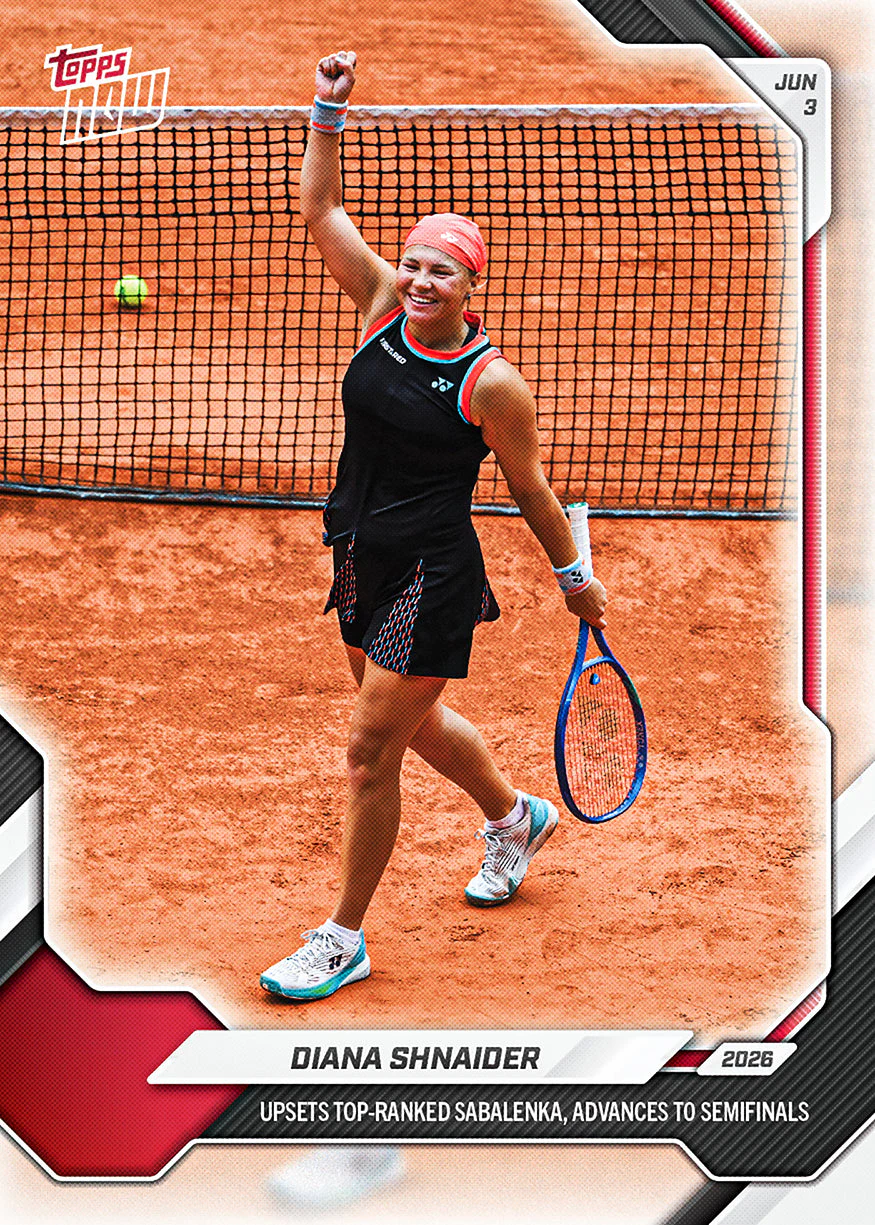
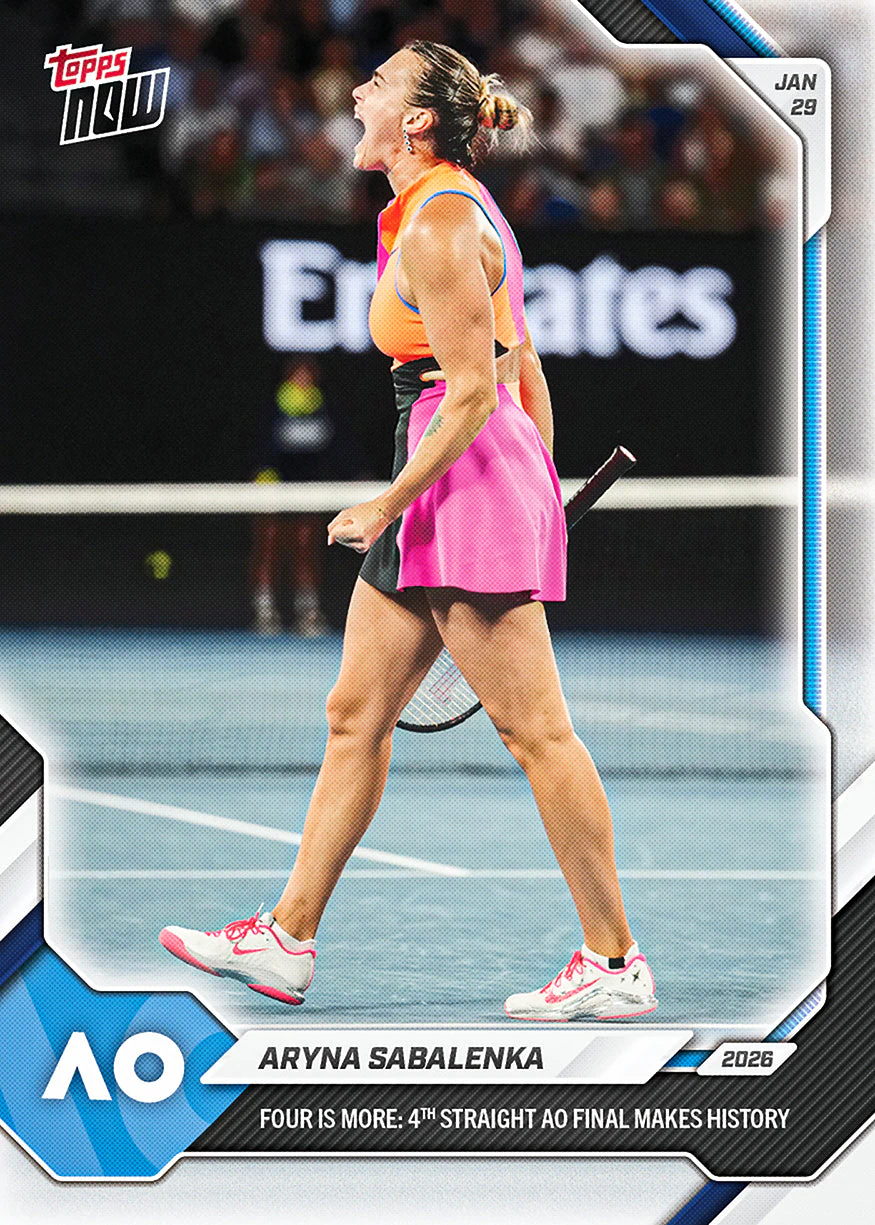
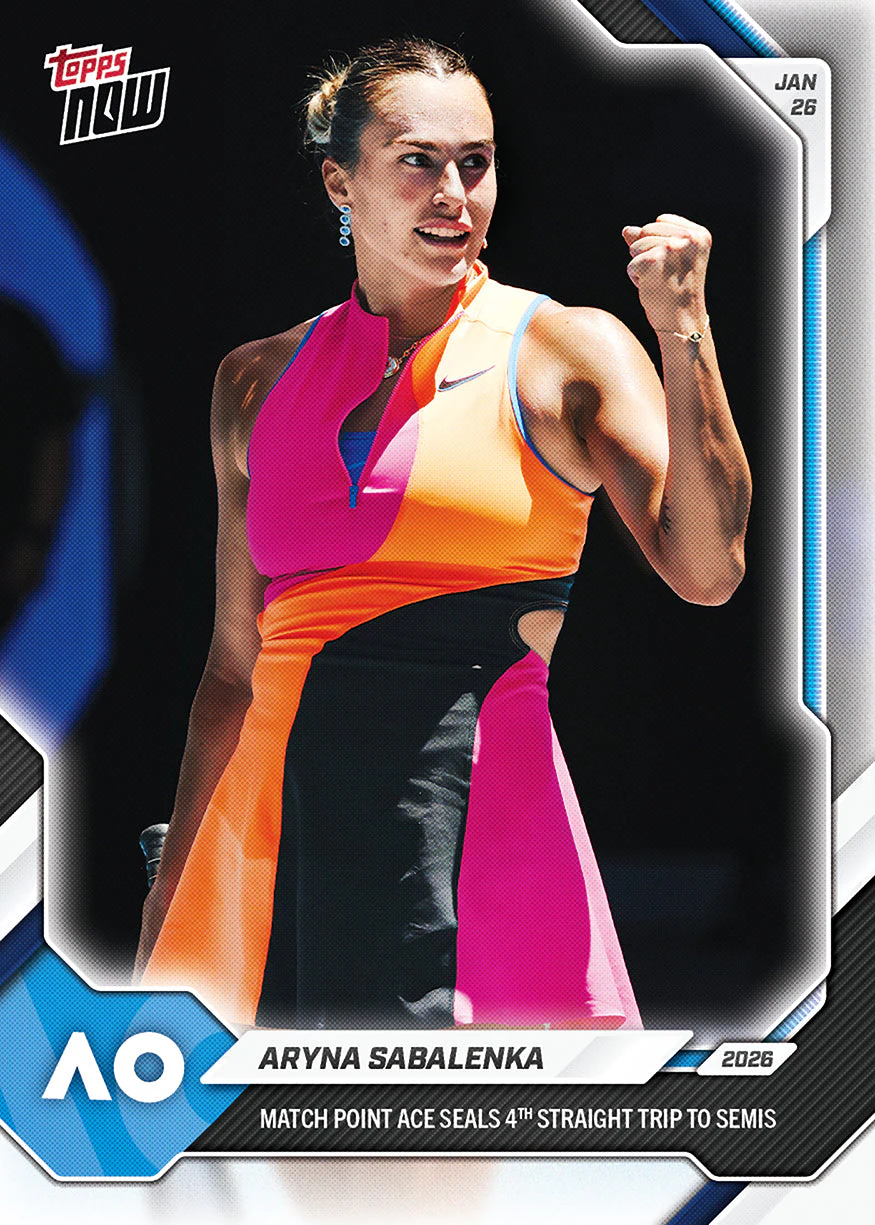
Diana Shnaider #16 is the base-supply low at 419. Aryna Sabalenka #6 sits at 427; her #4 at 480. All three together add up to 1,326 copies, only 3.1% of the archive.
That is scarce cardboard. It may also be quiet cardboard. Before calling any of them overlooked, we need exact searches, completed sales, seller concentration and enough time to see whether collectors return after the sporting headline fades.
Sabalenka is the cleanest experiment in the set
Four Sabalenka cards let us hold the athlete constant. #4 printed 480, #6 printed 427, #12 printed 984 and #13 printed 2,214. The name stays the same while the moment, image, chase configuration and order response move around it.
That 5.2× range is more useful than a generic ‘Sabalenka market.’ Collectors do not buy a surname in the abstract; they buy a numbered piece of cardboard tied to one photograph and one sentence.
Same athlete does not mean same demand. Sabalenka’s four reviewed cards span a 5.2× print-run range.
The next work is market work
Now the two ends of the chart need different tests. Shnaider #16 and the two low-run Sabalenkas need repeat completed sales. Eala #18, Alcaraz #11 and Fonseca #15 need sell-through measured against much larger populations. Autograph and relic chases must stay out of the base-card lane.
For today, the honest conclusion fits in two lines. Eala #18 won the order window. Shnaider #16 won the scarcity line. Neither has yet won a price recommendation.
Sources and card records
Publisher pages and inspectable card records establish the cards and print runs; official sports bodies establish the results. The ranking and interpretation are ours.